Adaptive Controller · Thesis project

A controller
that knows
you're tilted —
before you do.

BlitzMind reads your physiology in real time and adapts the game around you. Not to interrupt. To keep you competitive when your body starts working against you.

Open the app
HK
HarnitK#7421 Diamond II · NA-East
Live
HRV
72ms
stable
Engagement
78%
peak focus
Grip
84%
consistent
Calm Score
64%
↓ Gulag fight
01 The problem

Your hands sweat.
Your grip tightens.
Your aim drifts.
And the game has no idea.

Competitive players already pay the cost of stress — slower reaction time, worse decisions, missed shots. They don't need another wellness app telling them to breathe. They need the game to respond to the body that's playing it.

Reaction time, stressed
260ms
Best: 210 ms · Worst: 320 ms
HRV drop, late round
−7%
From session average
Peak stress event
42ms
During Gulag fight
"
Stress is impacting my performance — and my personal life. I don't want to pause. I want a tool that helps me play through it.
Harnit Khatri Pro esports player · 25–30 hrs/week · Counter-Strike, PUBG
02 The system

Three loops,
one controller.

Sense
Read the body

HRV through the grips, sampled continuously.

PPG pickup, skin response across the contact surface, grip pressure on every input. All on-device — nothing leaves the controller without you saying so.

Adapt
Shape the game

When physiology crosses your thresholds, the game responds.

Brightness, HUD clutter, loadouts, audio — adjusted to keep you in control of the moment. Set the rule once. It runs in the background.

Analyze
Learn the patterns

Every session becomes data. Including the bad ones.

See where stress hits, which maps cost you, what your peak performance window looks like. Then adjust the thresholds for next session.

Trigger / 01 Standby

Drag the threshold.
The settings react live.

78% Calm · live
Adapt when calm drops below
65 %
20% 90%
Active adaptations
Brightness
100% 60%
HUD clutter
Visible Minimal
Loadout
AK-47 M4 · Stable
Audio
Default mix Focus mix
Standby · calm 78% 89 BPM
Loadout
AK-47 · Standard
53/210
03 Analyze · Post-session

Every match becomes data.
Including the bad ones.

Session · 12.04.26

Warzone · Ranked

30:14 played
Avg HRV
64 ms
−7% vs. last session
Peak stress
42 ms
t+20m · Gulag fight
Recovery
2:14
back to baseline
Calm score
68%
−4% below forecast
The takeaway
Your reaction time was 22% slower during the stress spike at t+20m. Same map, same opponent type — but your body told the story before the scoreboard did.
Calm score · 30 min match · stress event
t+0m t+15m t+30m 100 60 20
t+12m
Warmup peakReaction time best of the session
t+20m
Gulag fightHRV crashed 30% in 90 seconds
t+27m
Final circleStress event during decisive engagement
04 Inside the app

Configure once.
See the whole picture.

The companion app is where you onboard, set thresholds, watch sessions play back, and tune which adaptations fire when. Seven screens from the live build — drag through them.

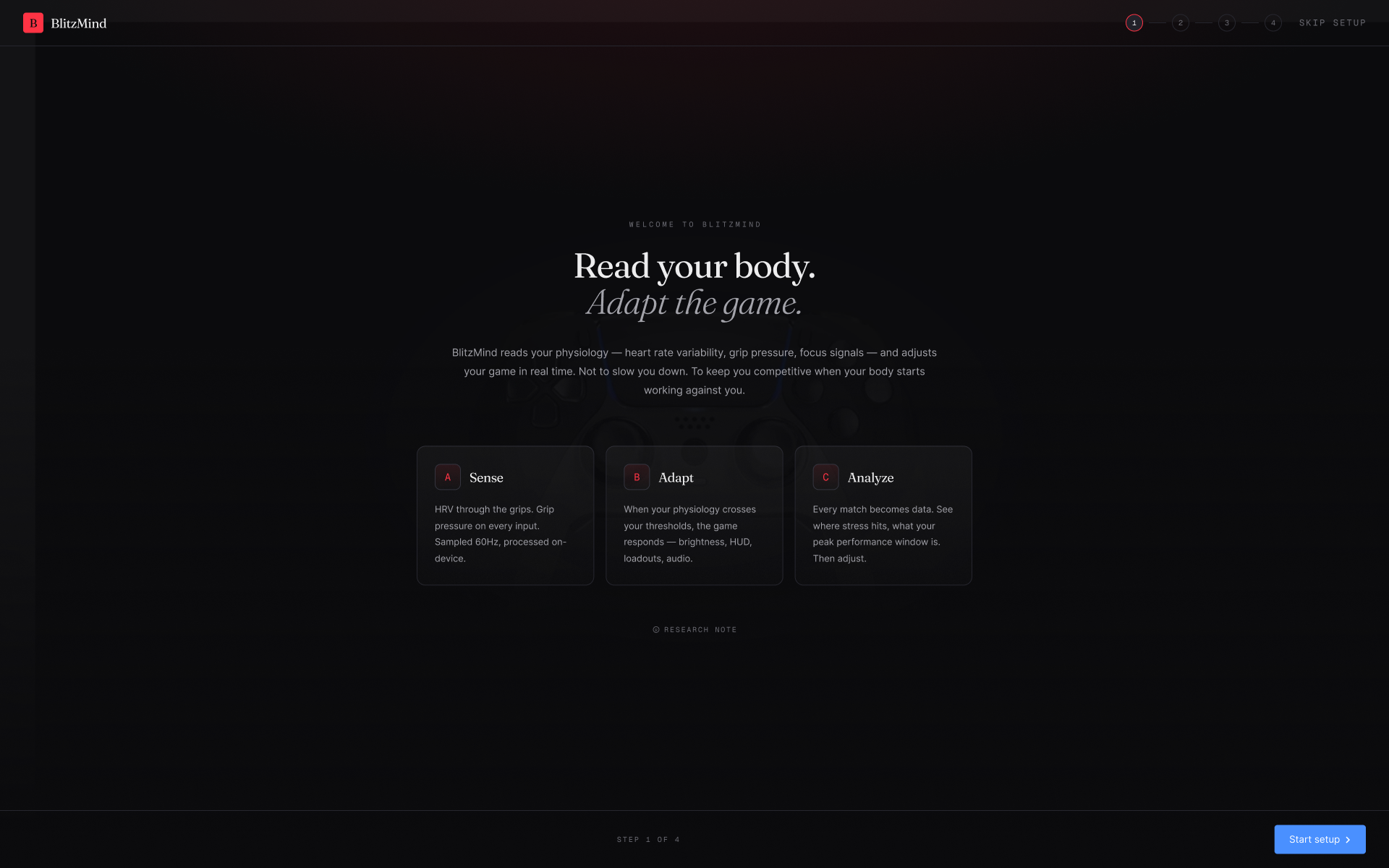
Onboarding — welcome
Onboarding · Step 1
Read your body.
Sense, Adapt, Analyze — the three loops introduced before you connect anything. Two minutes from here to your first session.
01Setup intro
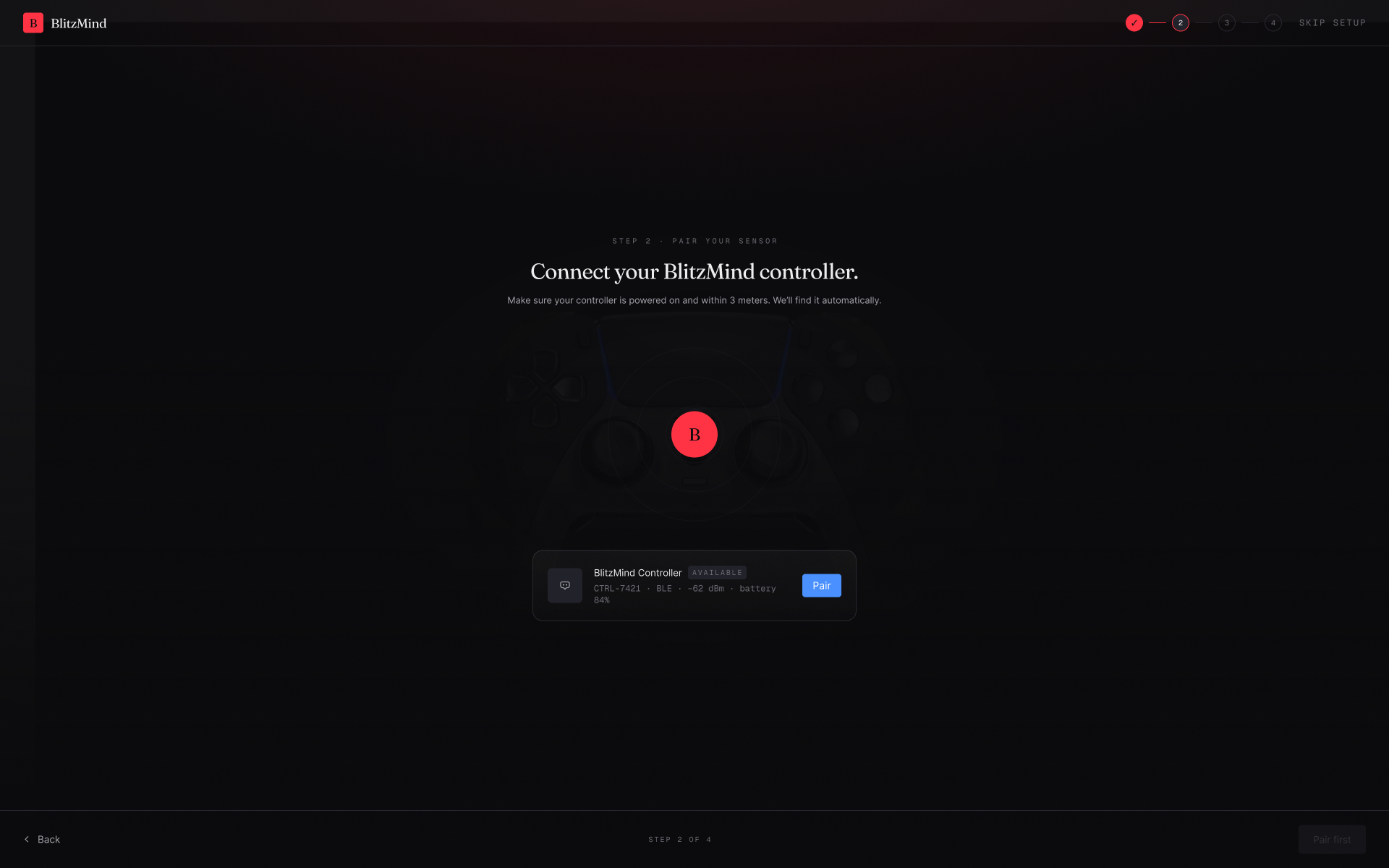
Onboarding — pair controller
Onboarding · Step 2
Pair the sensor.
Power the controller on, hold it within 3 meters. BLE handshake, calibration ready. No app-store nonsense.
02Sensor pairing
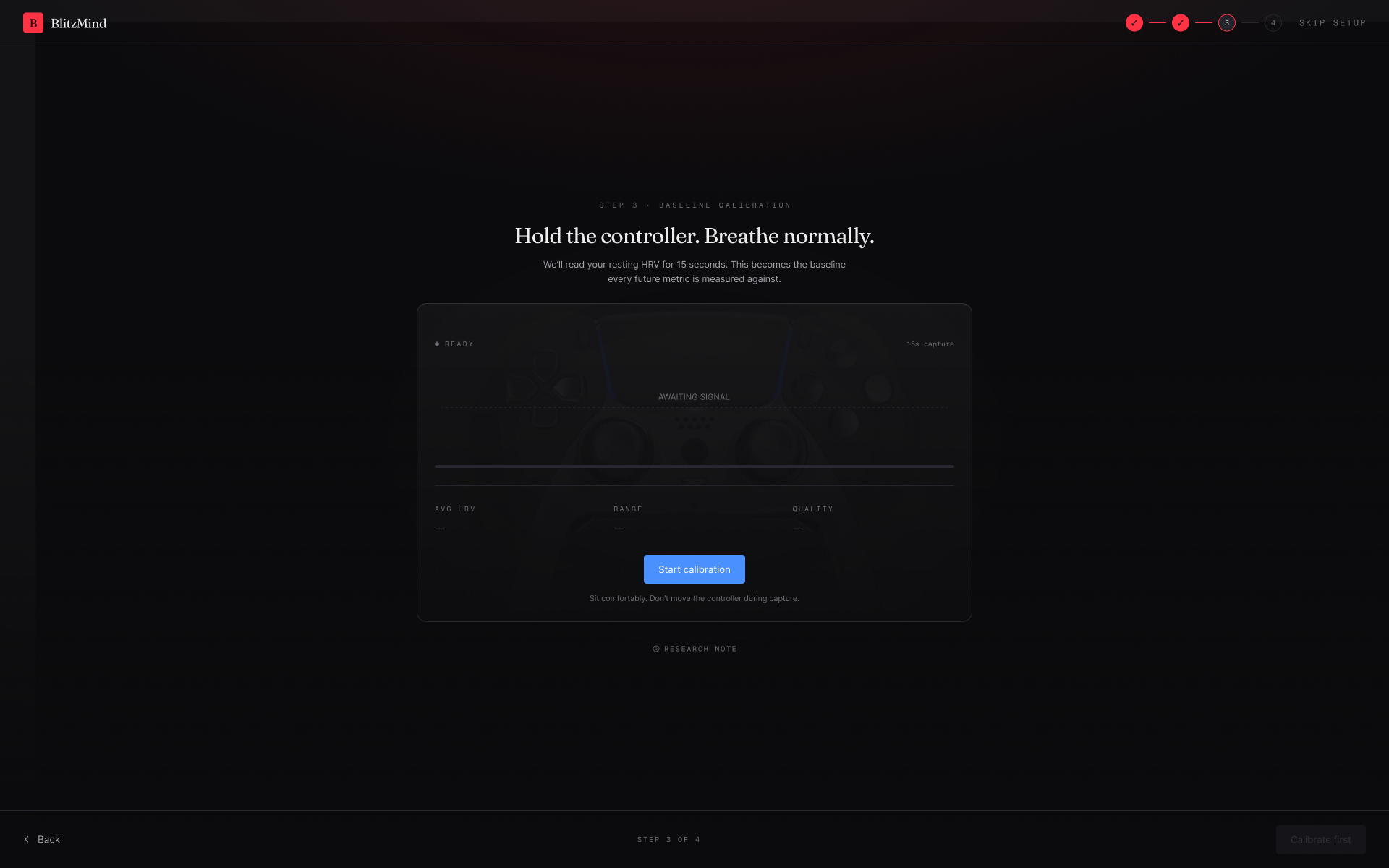
Onboarding — calibrate baseline
Onboarding · Step 3
Hold and breathe.
15 seconds of resting HRV capture. This becomes the baseline every future metric is measured against — yours alone, not a population average.
03Baseline capture
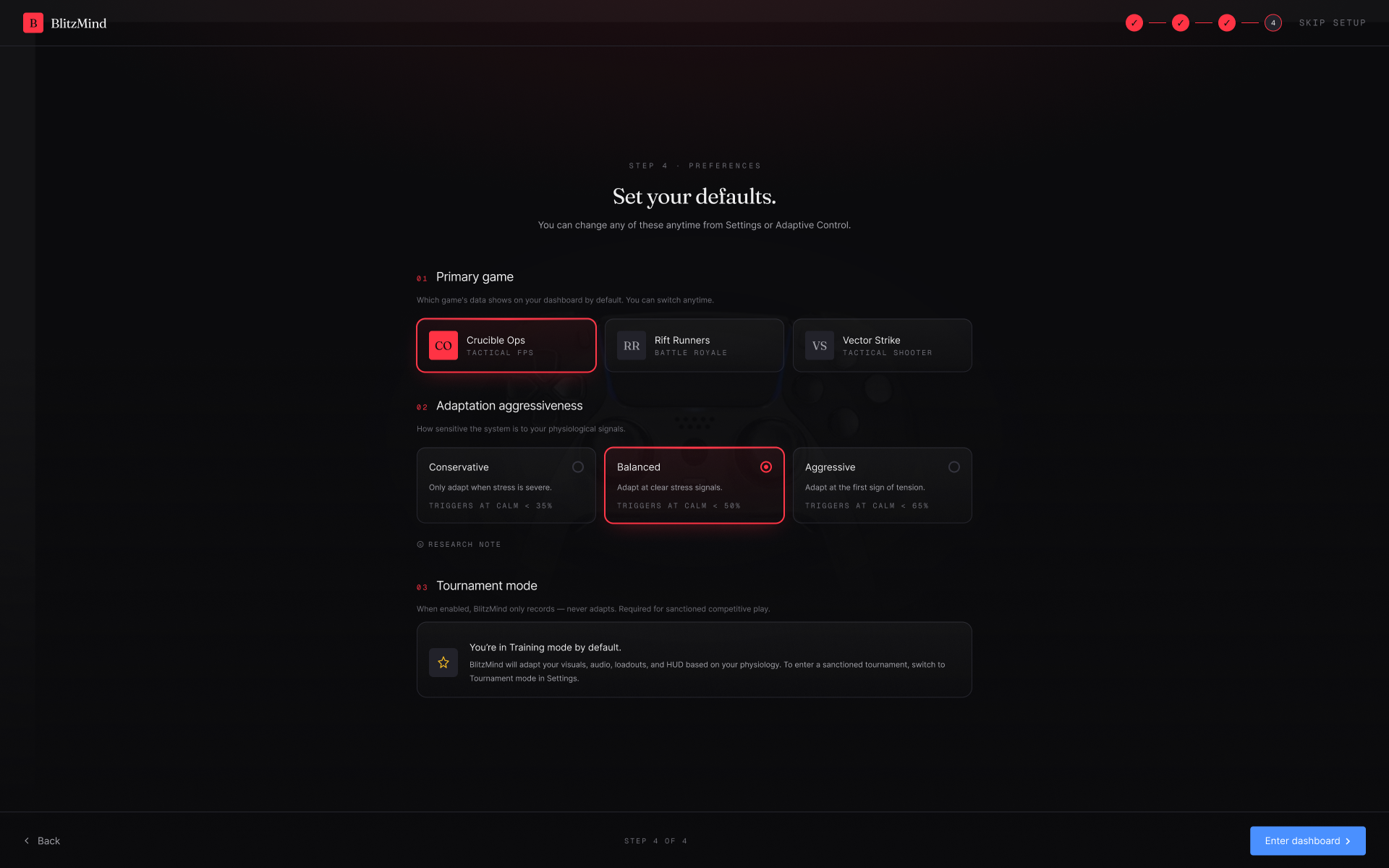
Onboarding — preferences
Onboarding · Step 4
Set the defaults.
Primary game, adaptation aggressiveness, training vs. tournament. Everything here is editable later — this is just the starting point.
04Defaults
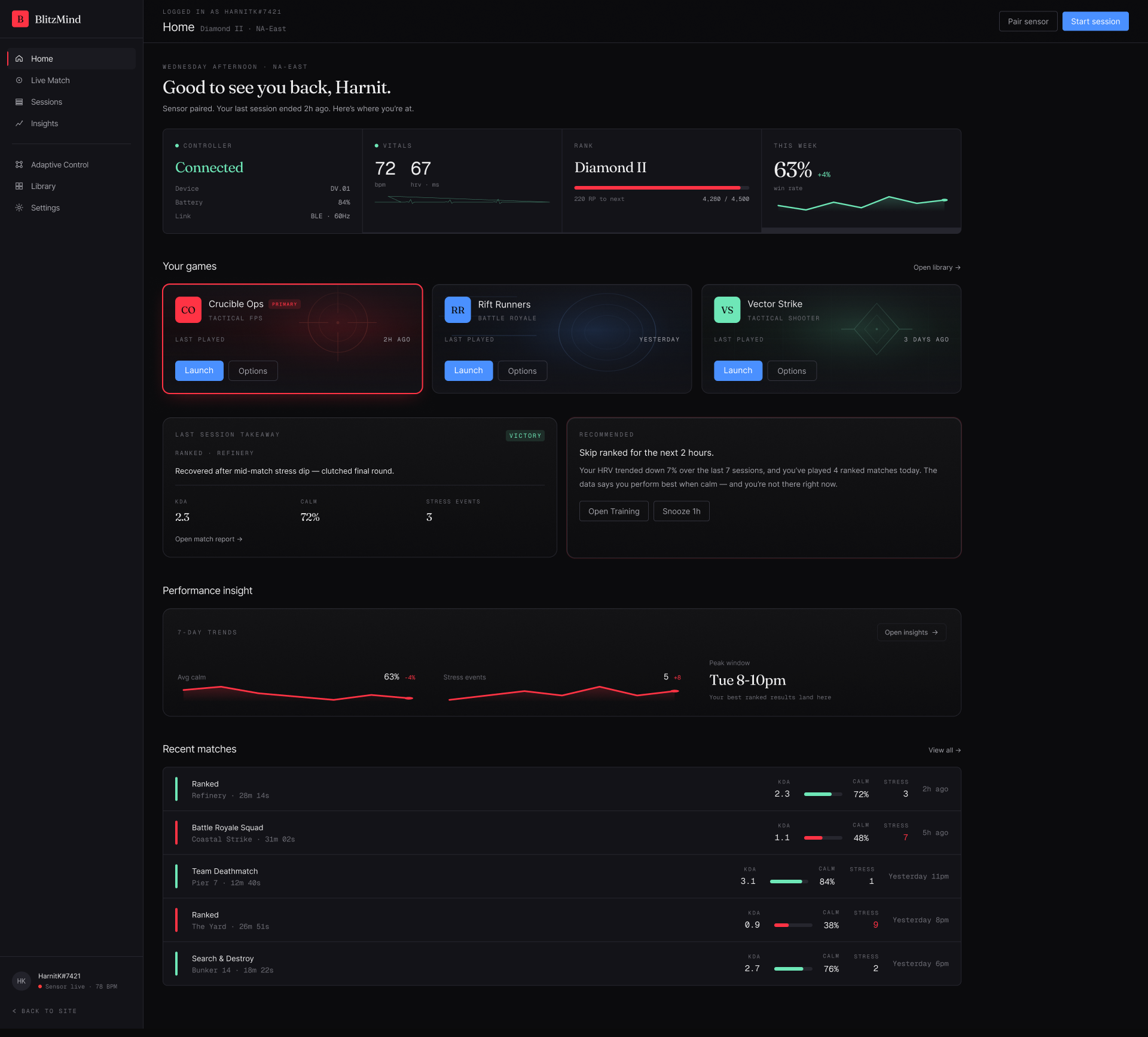
BlitzMind dashboard
Home
The dashboard.
Controller status, vitals, rank, weekly trend, last-session takeaway, recommended action. Everything you check before a session.
05App home
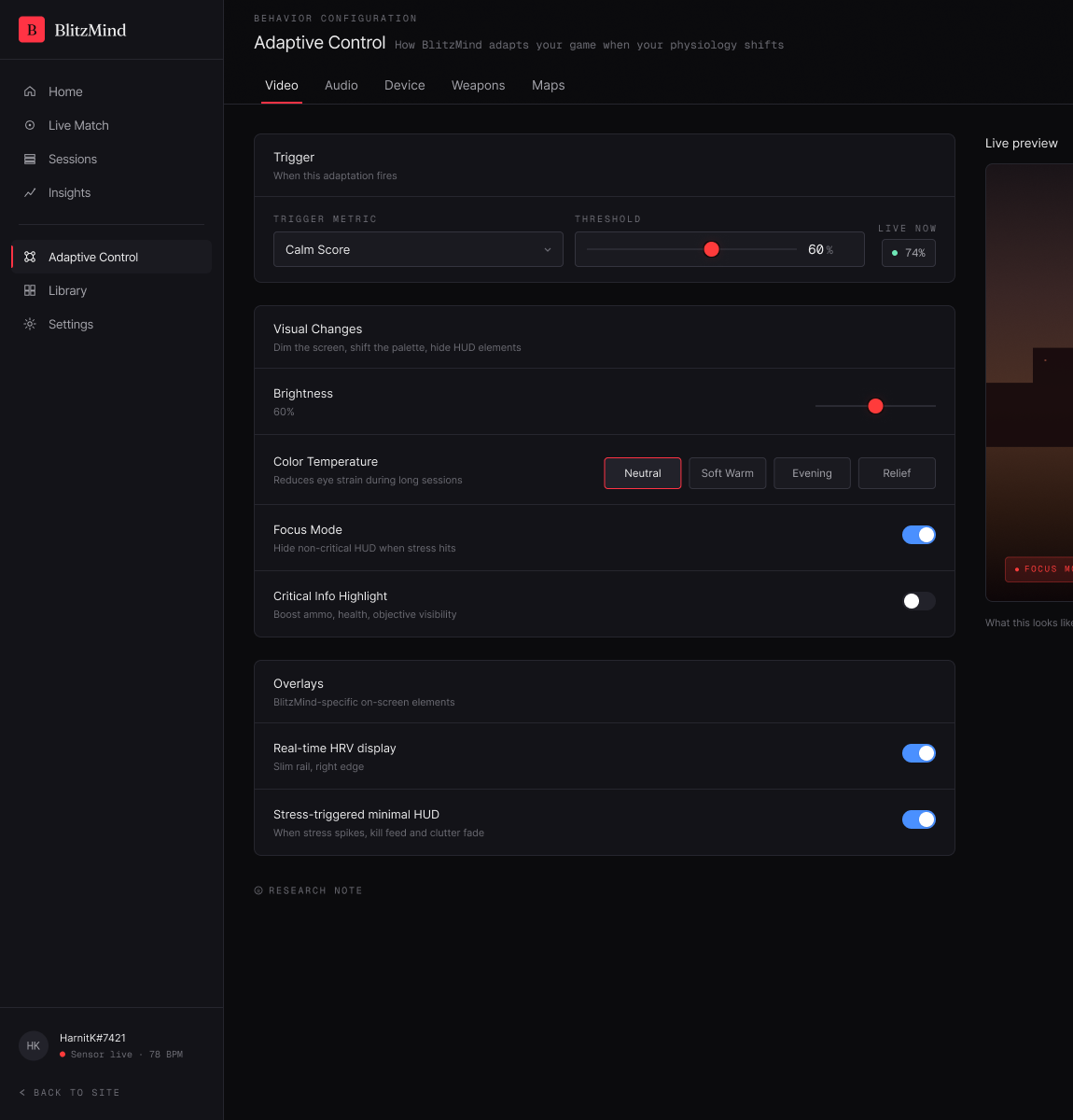
Adaptive Control panel
Adaptive Control
Tune the response.
Per-adaptation triggers, thresholds, visual changes, overlays. Live preview shows what each setting looks like in-game before you save.
06Configuration
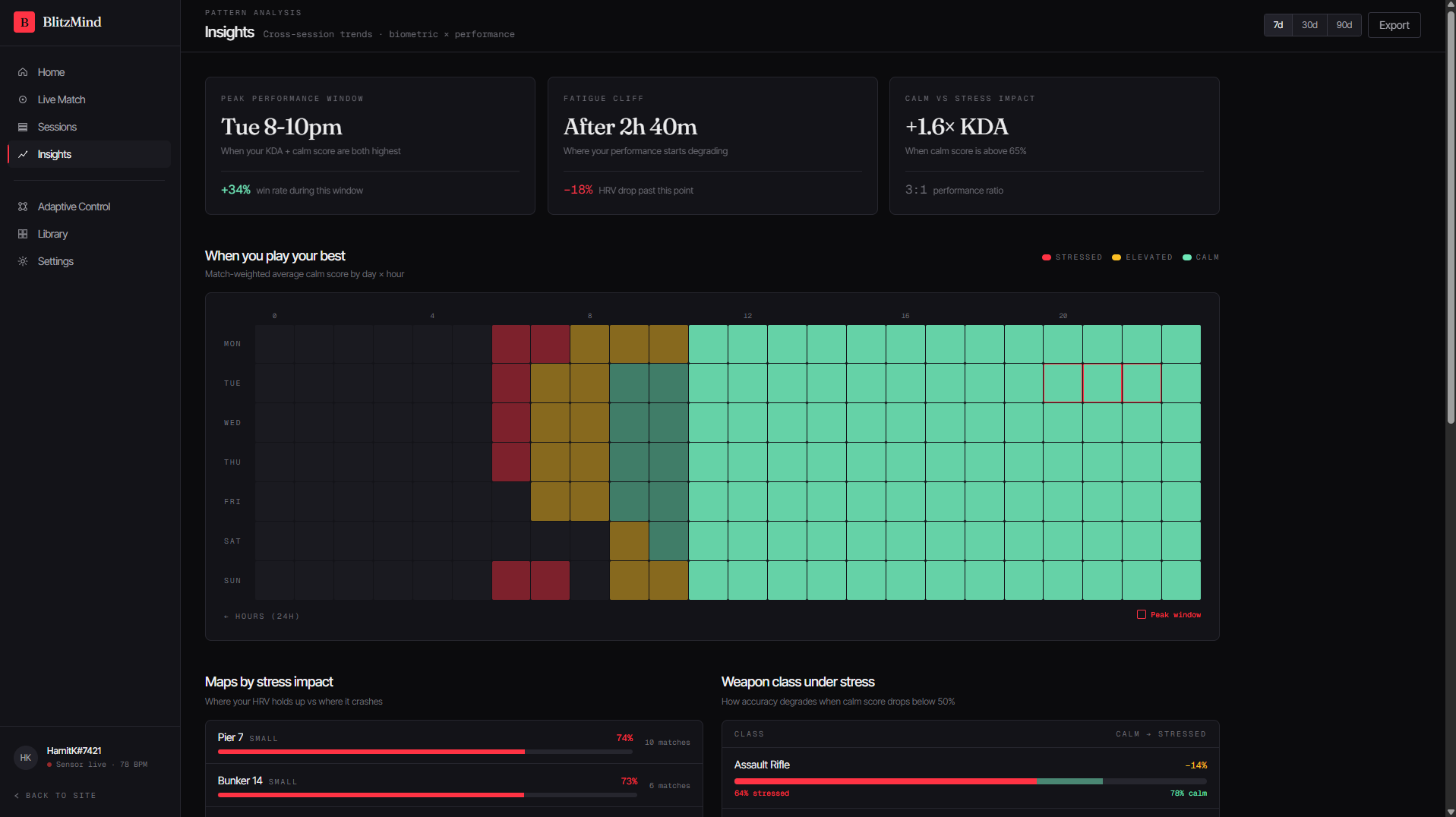
BlitzMind insights
Insights
Find your peak window.
Cross-session pattern analysis. Where your HRV holds up, which maps cost you, how accuracy degrades under stress — and the days and hours when you actually perform best.
07Pattern analysis
06 In the game

The overlay you don't
have to look at.

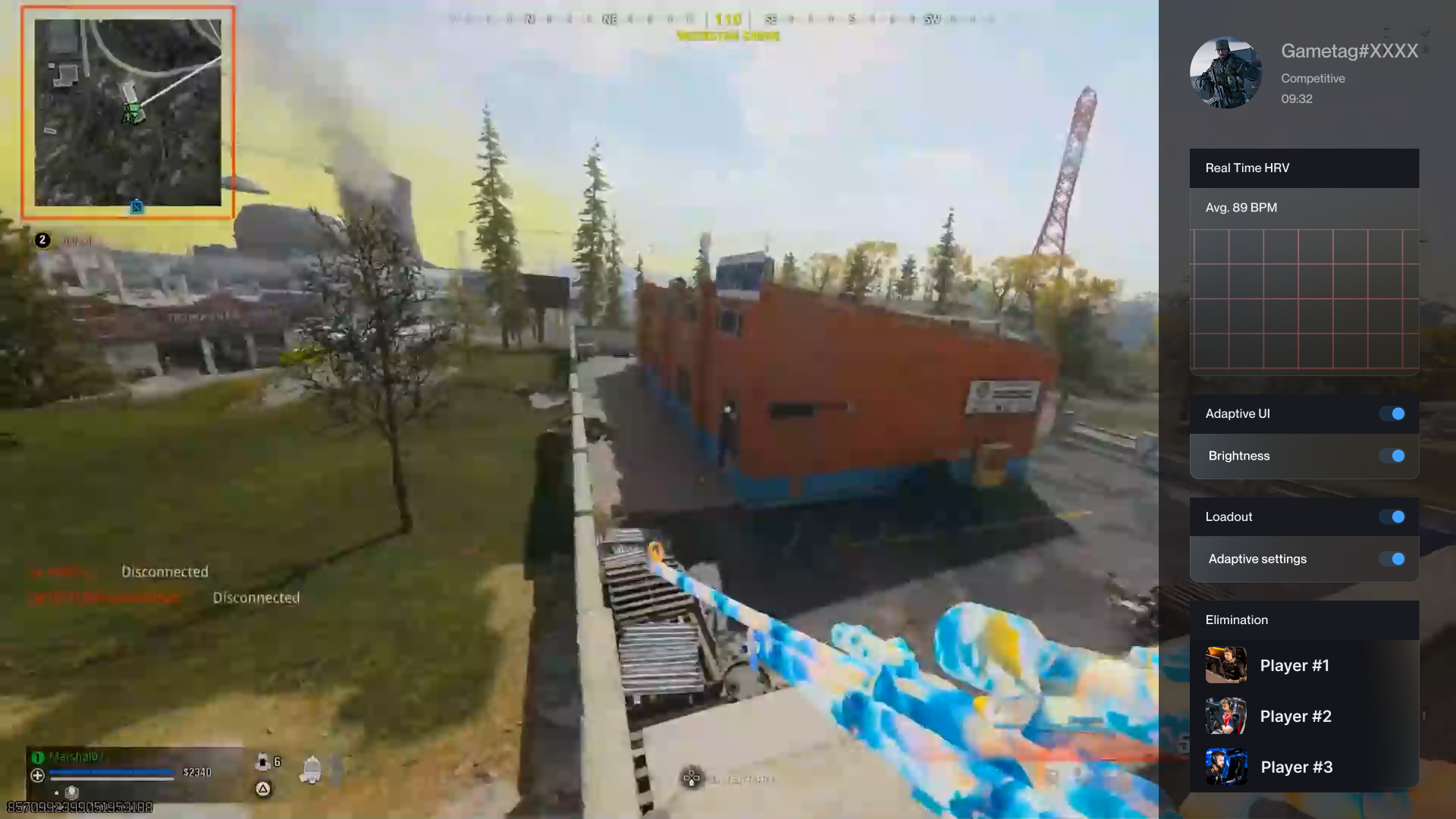
A slim rail on the edge of your screen. Real-time HRV. Adaptive toggles you set once and forget. It stays out of your way until your body asks for help.

BlitzMind in-game overlay

Slim rail · screen-edge

Never blocks your sightlines. Designed to be peripheral, not focal.

Live HRV

Read through the grip, continuously. No wearables, no extra hardware — the controller already touches your skin.

Set once, forget

Configure your thresholds before the match. The toggles do the work during it. You stay in the game.

07 The hardware

Built, not just designed.

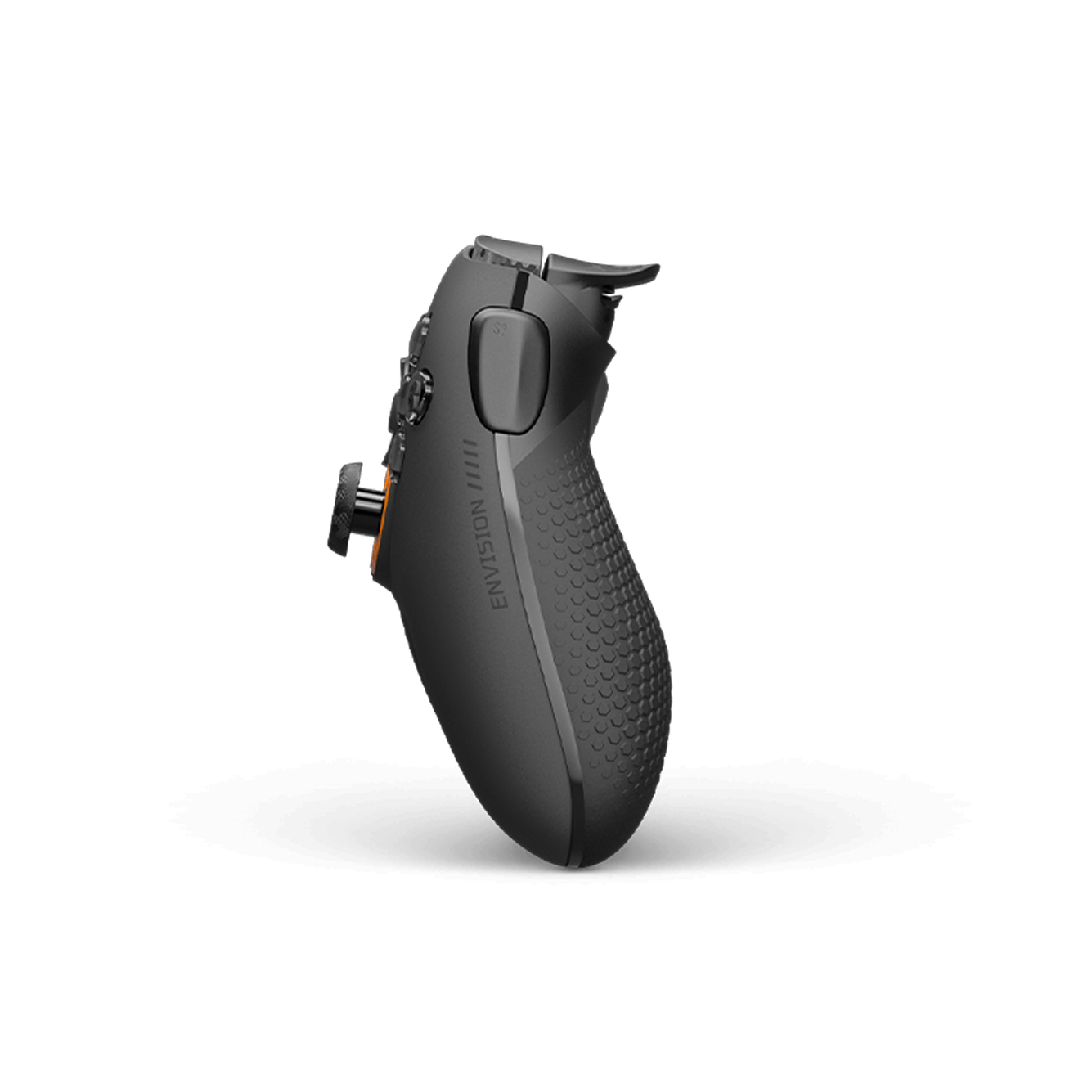
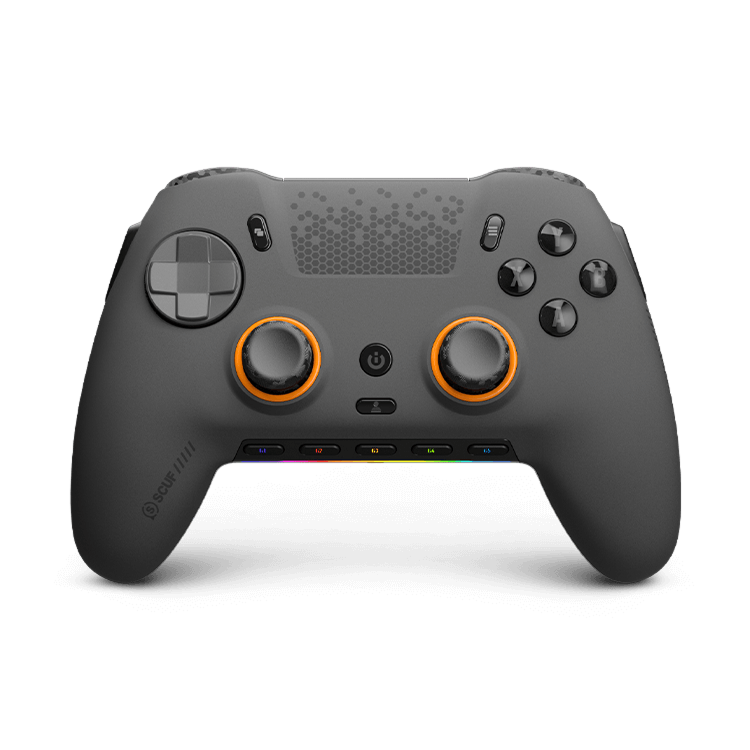
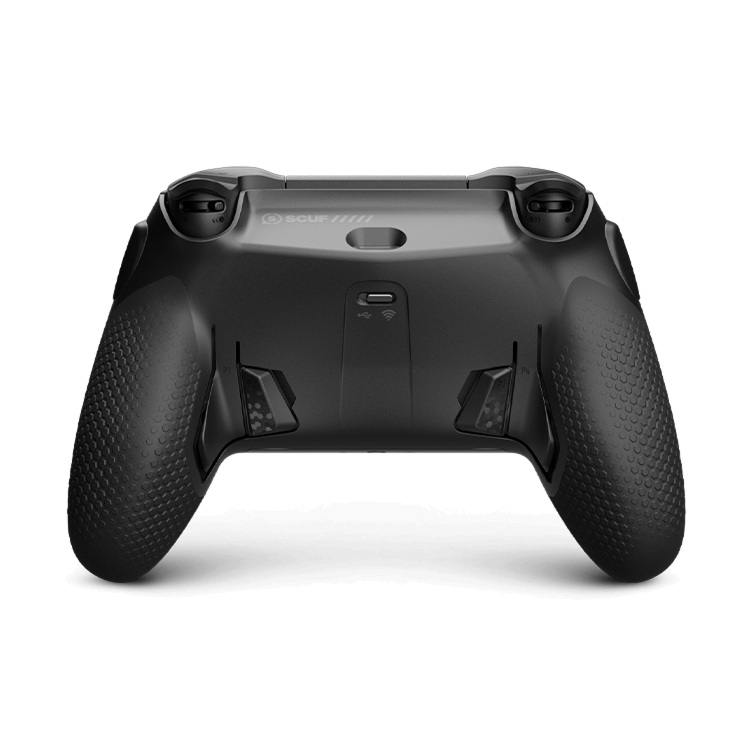
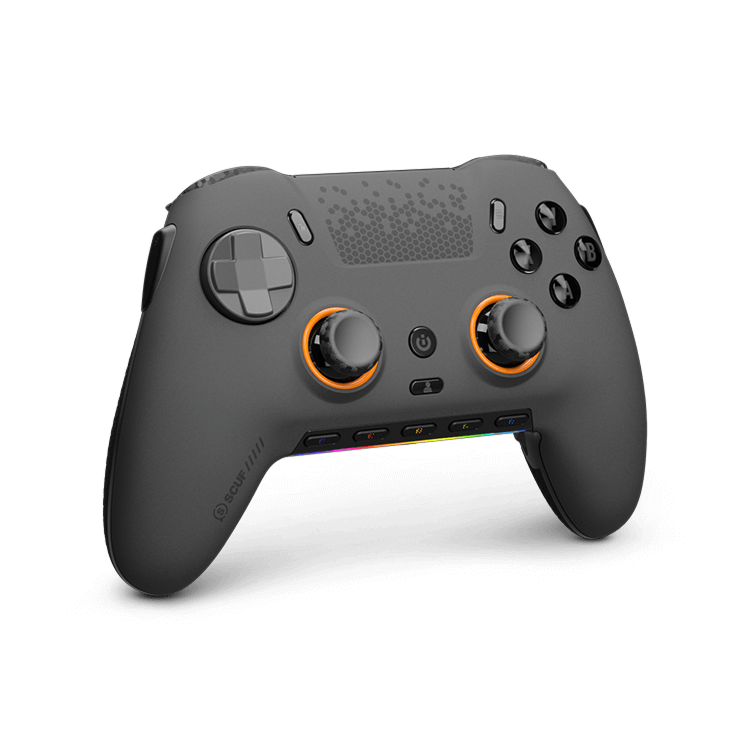
The BlitzMind controller pairs a working sensor stack with a custom industrial design. The grip surface houses HRV pickup, grip-pressure sensing, and skin response — all integrated where your hands already are.

HRV AFE4900 — medical-grade PPG Sensor
Motion Bosch BNO055 IMU 9-axis
Grip FSR strip across each handle Force
Compute ESP32 + on-device ML inference SoC
Link Bluetooth Low Energy Radio
08 The story

We almost built a wellness app.
Then we asked the players.

01Origin

Born from game rage.

The first concept warned you when you were getting tilted. Monitors flying, headsets snapped, controllers hurled — we thought the problem was the rage. We put it in front of players. They disagreed.

02Research

30 surveys. 5 interviews. One verdict.

Direct stress alerts mid-game felt like a backseat driver. Nobody was willing to pause their gameplay to listen to a tool. Players acknowledged the rage — they just refused to stop playing because of it.

"Biofeedback tools could help manage emotions without distractions — but only if they don't interrupt the game." — Harnit Khatri, pro esports player
03Pivot

From feedback
to mechanics.

We stopped trying to fix the player. We started adapting the game. Stress became a performance signal — input to a system that adjusted around the player rather than against them. The wellness app died. The adaptive controller began.

Open the app.
See your body play.

The BlitzMind companion app runs the live demo, the session readouts, and every adaptation in the system. No controller required to look around.

Open the app